01 Building the foundation
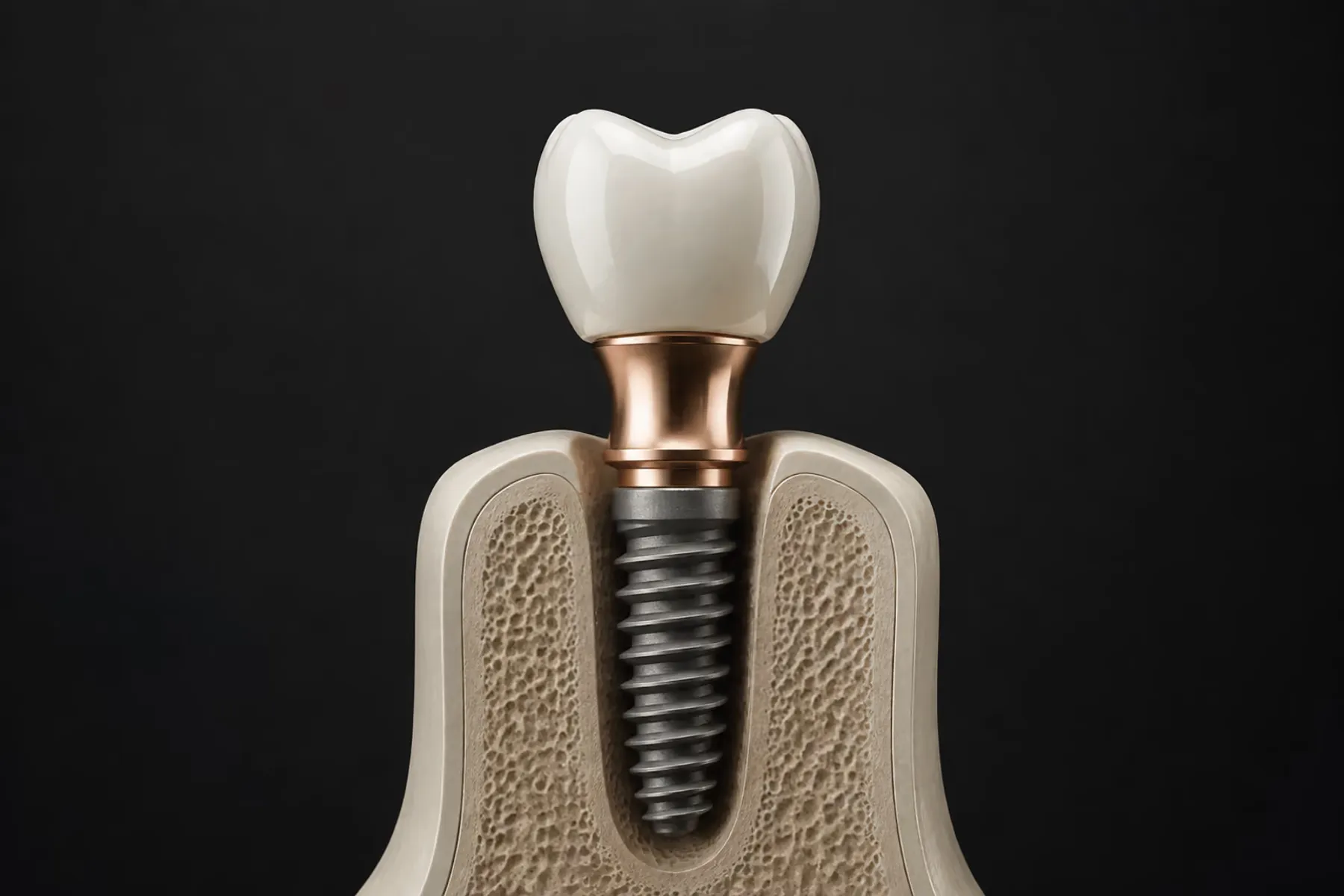
Bone grafting and sinus lifts, for when there isn’t enough bone
Being told there is not enough bone is usually a step in the plan, not a refusal.
- Cost
- From £650
- Typical range
- £650 – £1,900
- Time
- Added to the surgery visit, or 4–6 months beforehand
This page covers one part of what we do. The full picture is on dental implants in Belfast.
02 Suitability
Is bone grafting right for you?
A good fit if…
- You have been told elsewhere that you are not suitable for implants
- Teeth have been missing long enough for the ridge to have narrowed
- An upper back tooth is missing and the sinus has dropped into the space
- You are prepared for the treatment to take longer than a straightforward case
Probably not if…
- You need the whole thing finished quickly — grafting adds months, not weeks
- You smoke heavily, which affects graft healing more than almost anything else
- The bone loss is so extensive that a different treatment plan makes better sense
- Medication or medical history makes bone healing unpredictable, which we assess individually
03 Process
How it works
The full six-step process, including what happens after the teeth are fitted, is on the pillar page.
-
01 60 minutes
The scan that settles it
A CBCT scan measures the height and width of bone you actually have. A flat X-ray cannot show width, which is why so many people are told “not enough bone” without a number attached.
-
02 Same appointment
Deciding which graft, if any
Small deficiencies are grafted at the same visit as the implant. Larger ones are grafted first and healed for four to six months before the implant goes in.
-
03 30–90 minutes
The grafting procedure
Graft material is placed and covered with a membrane. For a sinus lift, the sinus floor is gently raised and the space beneath it filled.
-
04 4–6 months
Healing
The graft turns over into your own bone. A second scan confirms it before any implant is placed.
04 The price
What’s included
From £650
Typically £650 – £1,900. Added to the surgery visit.
- CBCT scan and measurement of available bone
- Graft material and membrane
- The grafting procedure itself
- A follow-up scan to confirm the result before implant surgery
- Review appointments during healing
05 In detail
Why the bone disappeared
Bone in the jaw exists to hold teeth. When the tooth goes, the bone that surrounded it has no function, and the body reclaims it.
The pace is well documented: around a quarter of the width of the ridge is lost in the first year, and it carries on more slowly thereafter without ever quite stopping. Someone who lost a molar at forty and comes to us at sixty has a ridge that is a good deal narrower than the one they had. That is not neglect — it is simply what bone does.
Two other things accelerate it. Gum disease destroys bone while the tooth is still present, so the ridge was already reduced before the extraction. And a denture pressing on the ridge for years speeds up resorption rather than protecting it, which is one of the more counterintuitive facts in dentistry.
The upper back jaw, and the sinus
The maxillary sinus is an air space that sits above the upper back teeth, and it behaves in a way that catches people out: as the molar roots are lost, the sinus expands downwards into the vacated space.
So the height of bone between the ridge and the sinus floor, which might have been twelve millimetres when the tooth was there, can be three or four a decade later. Three or four is not enough to hold an implant.
A sinus lift adds it back. The membrane lining the sinus is carefully elevated — lifted like a tent lining, not cut — and graft material is placed in the space created underneath. After four to six months that space is bone, and an implant of a proper length can go into it.
Where the shortfall is small, this is done through the implant site itself at the same appointment. Where it is larger, it is done as a separate procedure through a small window in the side of the jaw.
What “we’ll graft it” should always come with
A number, and a reason.
If you have been told you need a graft, the questions worth asking are: how many millimetres of bone are there now, how many are needed, and what measurement is that based on. If the answer does not include figures from a 3D scan, the recommendation is an estimate.
We put the measurements in the written plan. Sometimes they show a graft is unnecessary because a slightly different implant position solves it. Sometimes they show the shortfall is greater than a flat X-ray suggested. Either way, you can take that plan and those numbers elsewhere for a second opinion, which we encourage rather than discourage.
Smoking, specifically
We are direct about this here because grafting is where it matters most.
A graft depends on new blood vessels growing into the material in the first few weeks. Smoking constricts exactly those vessels, and graft failure rates in smokers are substantially higher than in non-smokers — considerably worse than the difference for implants alone.
We ask for two weeks before and eight weeks after. Cutting down is not the same thing, and vaping is not a solution. If somebody is not going to stop, we will still often treat them, but the plan changes and the honest odds change with it, and we would rather say that than take the money and hope.
07 Alternatives
What we’d also mention
We would rather you chose the right treatment than the one on this page.
All-on-4, which often avoids grafting
For a full arch, angling the rear implants forward reaches solid bone at the front and steps around the sinus and the nerve entirely. Where a patient has been quoted for extensive grafting on a whole jaw, this is very often the conversation worth having first.
A shorter or narrower implant
Implant design has moved on, and sites that would have needed grafting a decade ago sometimes take a shorter implant today. It is not always appropriate, but it is worth checking on the scan before committing to a graft.
01 I was told I don’t have enough bone. Is that final?
Usually not. It is very often said on the basis of a flat X-ray, which shows height but not width, and it is said without a measurement. A CBCT scan gives actual figures in millimetres. In the large majority of cases the answer is that bone can be built, or that a different implant position avoids the problem.
02 Where does the graft material come from?
Most commonly from a processed bovine or synthetic source, which acts as a scaffold your own bone grows into and is gradually replaced by. Taking bone from elsewhere in your own body is reserved for large defects and is not needed for the great majority of cases.
03 Is a sinus lift as unpleasant as it sounds?
It sounds far worse than it is. The sinus membrane is lifted, not opened, and the recovery is generally comparable to having a tooth out — some swelling, a few days of avoiding nose-blowing and flying. Most patients are surprised at how ordinary it turns out to be.
04 How much does it add to the cost?
A small graft at the same visit as the implant is £650 to £900. A larger ridge graft or a sinus lift ranges from £1,200 to £2,400 depending on volume. It is quoted from the scan before treatment begins, and it is never discovered mid-treatment and added afterwards.

Karen Doherty · Treatment coordinator
Not sure where to start?
Karen will talk you through the options — what your situation usually needs, what it costs and what it involves. A callback is free and carries no obligation; the consultation, with the examination and 3D scan, is £95.
Not ready to speak to anybody? Download the price guide (PDF) — every figure we charge, on one page.
Or ring the clinic directly on 028 9649 6180.