01 One visit
Same day teeth, fitted on the day of surgery
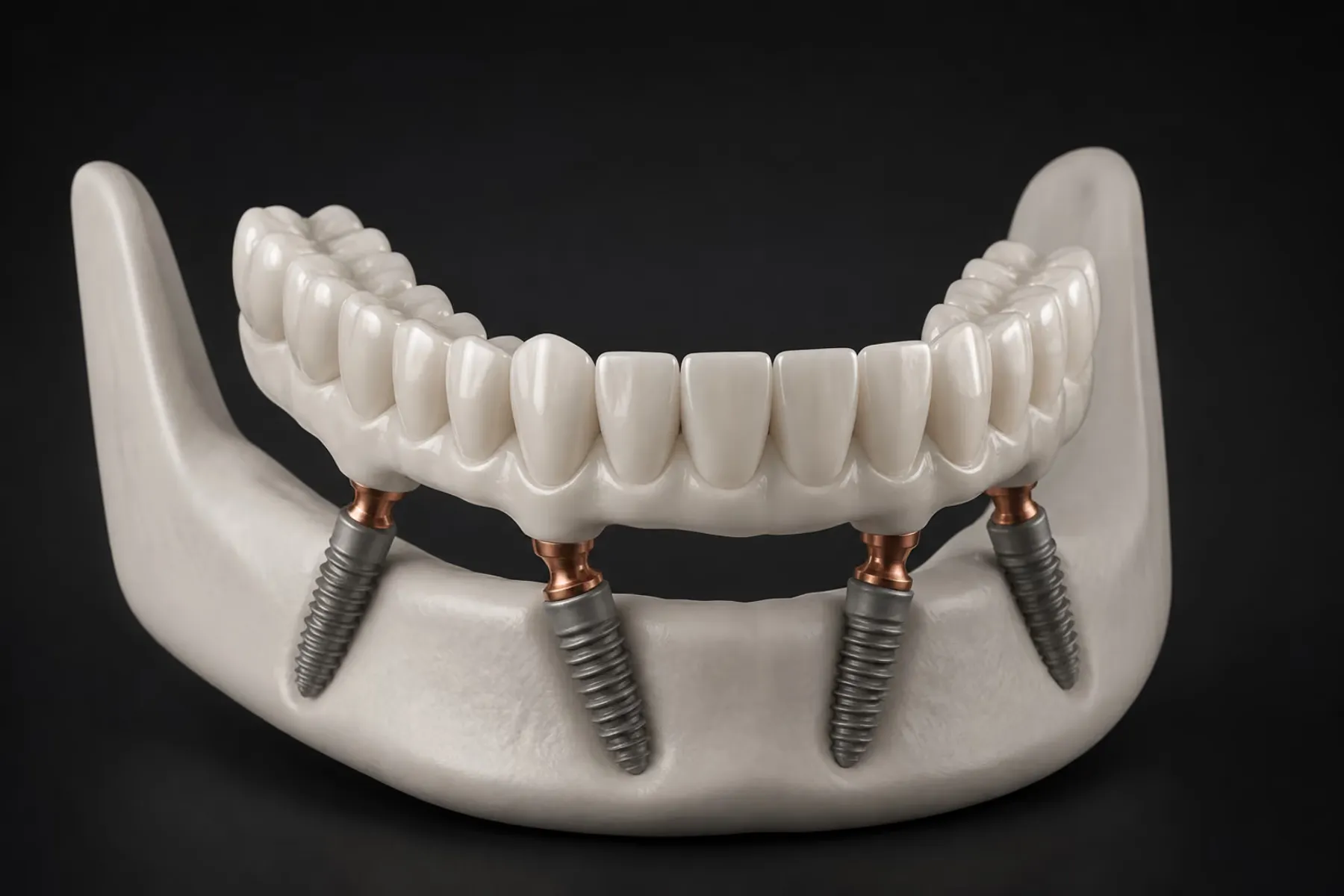
What can honestly be done in a day, and what still takes four months.
- Cost
- From £12,500
- Typical range
- £12,500 – £15,000
- Time
- Surgery day, then 4 months to the final teeth
This page covers one part of what we do. The full picture is on dental implants in Belfast.
02 Suitability
Are same day teeth right for you?
A good fit if…
- You are having a full arch treated and want to leave with fixed teeth
- There is enough bone density to hold implants firmly on the day
- You can manage a soft diet for six weeks while the implants integrate
- You understand the teeth you leave with are provisional, not final
Probably not if…
- The bone is too soft to hold the implants immediately, which the scan shows
- There is active infection at the surgical sites
- You have a single missing tooth — the phrase is used for full arches, and a single implant follows a different path
- You want the finished, definitive teeth in one day, which nobody can honestly offer
03 Process
How it works
The full six-step process, including what happens after the teeth are fitted, is on the pillar page.
-
01 90 minutes, then 2–3 weeks
Consultation, scan and planning
Everything that makes a single-day surgery possible happens before it. The guide is printed and the temporary bridge is made in our laboratory in advance.
-
02 2–3 hours
Surgery day, morning
Remaining teeth removed, the ridge contoured, implants placed through the printed guide.
-
03 1–2 hours
Surgery day, afternoon
The pre-made bridge is adjusted to your mouth and screwed onto the implants. You go home with fixed teeth.
-
04 6 weeks
Six weeks of soft food
The implants are holding a bridge while they integrate. Chewing hard food during this window is the main way this treatment is undone.
-
05 4 months
The final bridge
Once the implants have integrated and the gum has settled, the definitive bridge is made and fitted.
04 The price
What’s included
From £12,500
Typically £12,500 – £15,000. Surgery day, then 4 months.
- CBCT scan, photographs and planning appointment
- Printed surgical guide
- Implants and extraction of remaining teeth in the arch
- A fixed temporary bridge fitted the same day
- The final bridge after healing
- Reviews through the first year
05 In detail
What the day actually involves
The term has been marketed to the point of meaninglessness, so here is what happens.
You arrive in the morning with failing teeth or a denture. Any remaining teeth in that jaw are removed, the ridge is smoothed, and four implants are placed through a guide printed from your scan. That takes the morning.
Then there is a pause of an hour or two while Marek adjusts the bridge — already made upstairs from the planning scan — to the mouth in front of him rather than the one on the model. It is screwed onto the implants in the afternoon, checked against your bite, and you go home with fixed teeth.
What has not happened is that your treatment is finished. The bridge you leave with is a provisional. It is a good one, made properly, and most patients would be content to keep it. But it is designed to be replaced at four months, once the implants have fused to the bone and the gum has settled into its final shape.
Why the day is possible at all
Immediate loading works because of primary stability — how tightly the implant is gripped by the bone at the moment it is placed.
An implant screwed into dense bone with enough torque is mechanically locked. It can carry a bridge straight away, provided that bridge is splinted across all four implants so no single one takes the force alone, and provided you are not chewing steak on it.
The number we look for is measurable, and it is measured in theatre on the day. If the implants do not reach it, we say so and place a temporary denture instead. That decision belongs to the surgeon during the operation, not to the marketing on a website, and it is the reason we describe this as usual rather than guaranteed.
The six weeks that decide it
The bridge is fixed. It looks like teeth and it feels solid, and it is very tempting to test it.
For six weeks the implants are held by friction while bone grows onto their surface. Heavy chewing in that window transmits micro-movement into the interface, and micro-movement is precisely what stops bone forming. There is no discomfort to warn you — an implant that is failing to integrate is usually silent until it is loose.
So: soft food, cut small, for six weeks. Fish, eggs, pasta, mince, well-cooked vegetables. Nothing that needs tearing. It is the least glamorous part of the treatment and the part that most determines the outcome.
Where the phrase gets stretched
Three claims are worth being sceptical about, wherever you are reading them.
“Final teeth in a day” — no. Tissue changes shape for months after surgery, and a definitive bridge made on day one fits a mouth that will not exist by month three.
“Suitable for everyone” — no. Soft bone, particularly in the upper back jaw, does not always give the grip immediate loading requires, and that can only be established once the implant is in.
“Same day teeth for a single missing tooth” — a misuse of the term. Front teeth often do get a temporary crown on the day for appearance’s sake, held out of the bite. That is worth having and it is not the same treatment.
06 A case
An upper arch replaced in a day
Nine remaining upper teeth, all mobile, held together by years of patching.
- Treatment
- All-on-4, upper arch
- Time
- Surgery day, then 5 months
- Cost
- £13,400
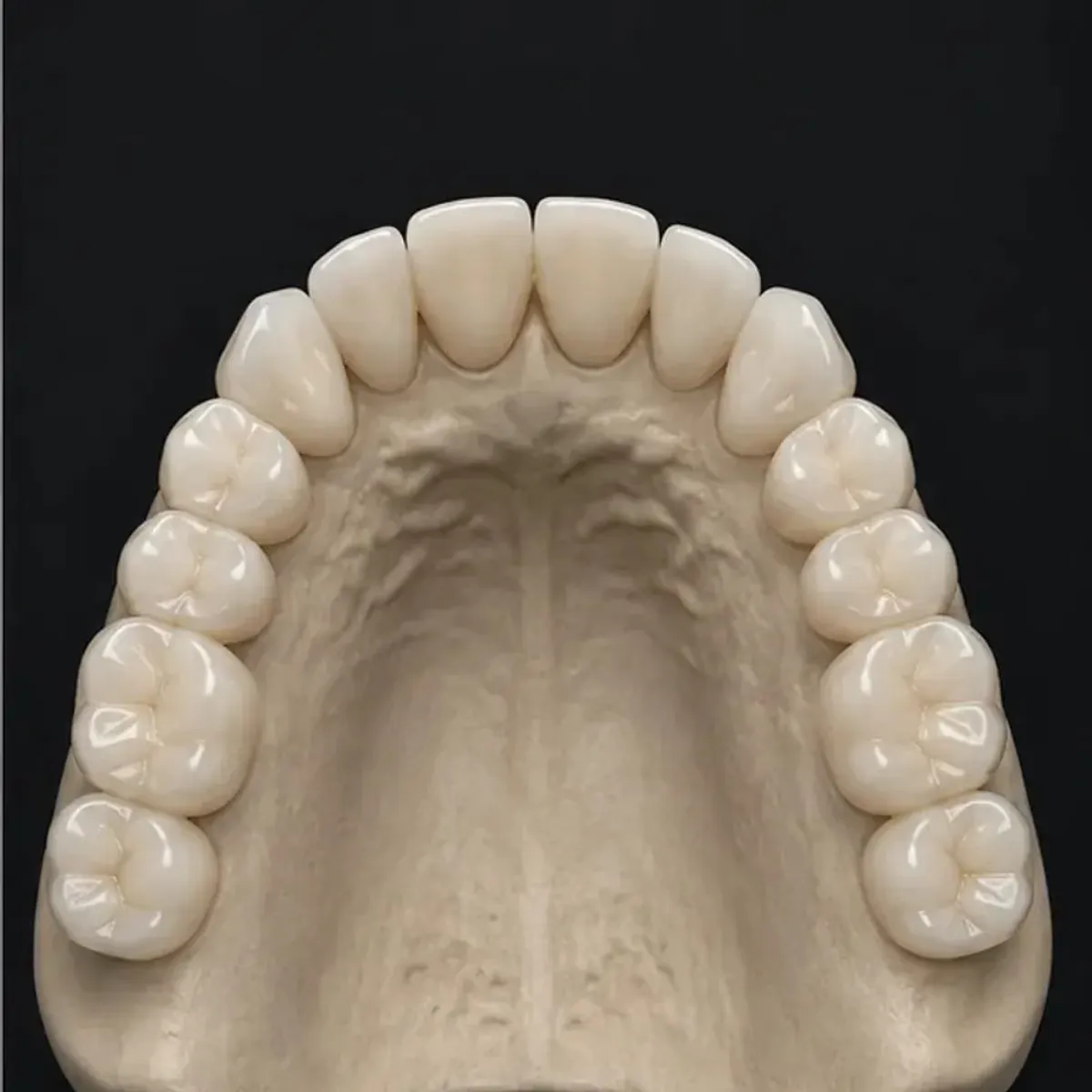
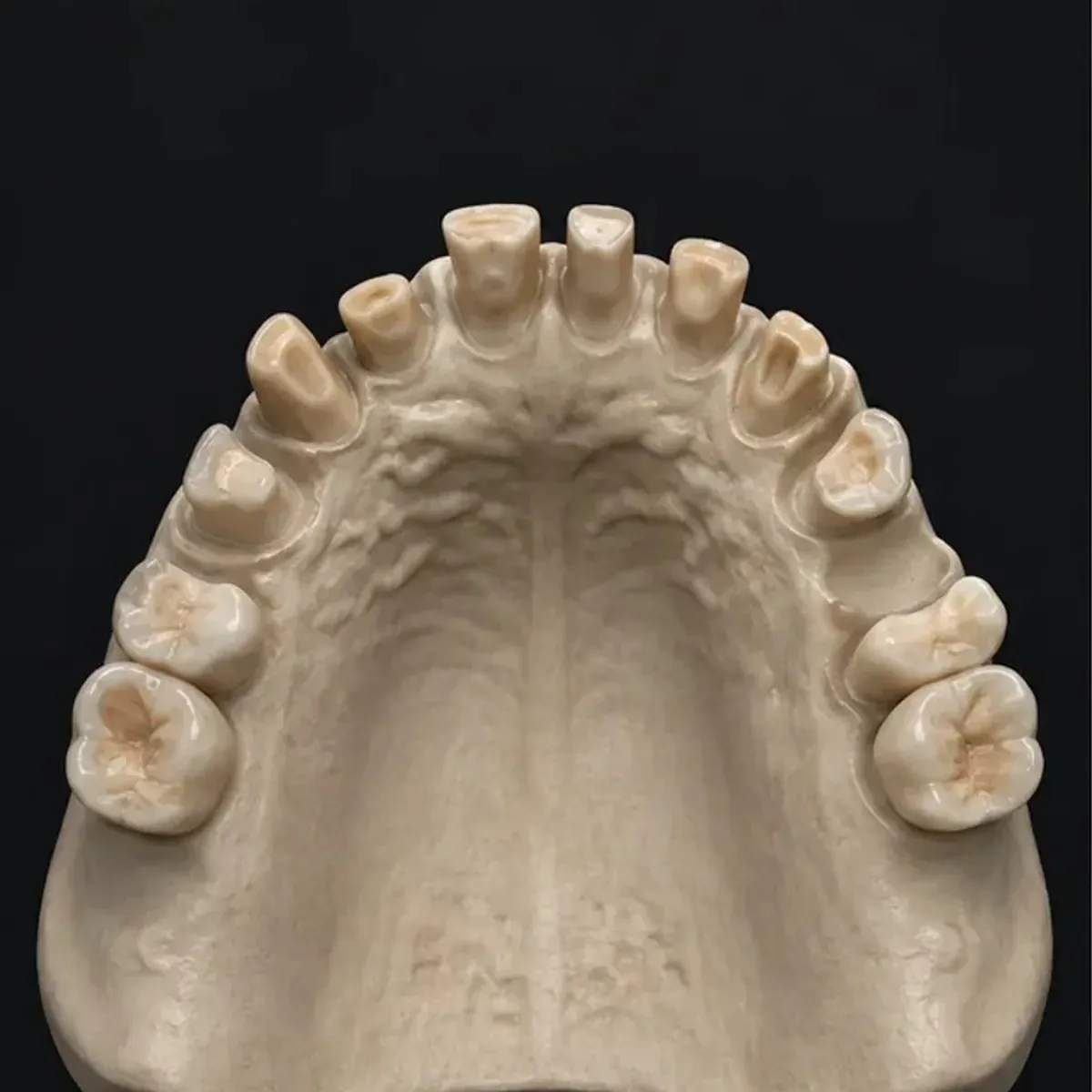
Illustrative example — not a photograph of a patient.
07 Alternatives
What we’d also mention
We would rather you chose the right treatment than the one on this page.
Conventional staged treatment
Implants placed and left undisturbed under the gum for three months, with a denture worn over the top meanwhile. Marginally safer in soft bone, and it means three months in a removable denture — which is precisely what most patients came here to avoid.
An immediate denture
A denture made in advance and fitted the day the teeth come out. Far cheaper, available to almost everybody, and removable. It is the traditional answer to the same problem, and for some patients it remains the sensible one.
01 Are the teeth I leave with the final ones?
No, and any clinic saying otherwise is stretching the truth. The bridge fitted on the day is a properly made fixed provisional — it looks like teeth, it works like teeth and it does not come out. The definitive bridge is made after four months, once the implants have integrated and the gum has finished changing shape.
02 What if the implants are not stable enough on the day?
Then we do not load them, and you go home with a temporary denture instead while they heal. This is uncommon and it is decided in theatre by measuring how tightly each implant is held. Fitting a bridge onto implants that are not ready is how immediate loading fails.
03 Can I eat normally that evening?
No. Soft food for six weeks, which is the single most important instruction in the whole treatment. The implants are being held by the bone mechanically rather than biologically at this stage, and heavy chewing before integration is what loosens them.
04 Does “teeth in a day” apply to a single tooth?
The phrase belongs to full arch treatment. A single implant can sometimes take a temporary crown on the day, which we do routinely, but that crown is kept out of the bite. It looks right immediately; it does not chew for three months.
Related treatments

Karen Doherty · Treatment coordinator
Not sure where to start?
Karen will talk you through the options — what your situation usually needs, what it costs and what it involves. A callback is free and carries no obligation; the consultation, with the examination and 3D scan, is £95.
Not ready to speak to anybody? Download the price guide (PDF) — every figure we charge, on one page.
Or ring the clinic directly on 028 9649 6180.