FAQ
Questions people actually ask
Written from the questions we get on the phone, which are not the same as the questions people ask in the chair. If yours is not here, ring and ask it.
Dental implant FAQs: cost and finance
What you pay, when you pay it, and what is included.
01 Why do you publish prices when most implant clinics do not?
Because the first question everyone has is what it costs, and being made to attend an appointment to find out is a poor way to treat people. The figures on our costs page are the ones we work to. The consultation exists to confirm which of them applies to you, not to reveal a number we were withholding.
02 Is the consultation fee refunded if I go ahead?
Yes. The £95 covers your examination, the CBCT scan and a written plan, and it comes off the cost of treatment if you decide to proceed. If you decide against it, the scan and the plan are still yours to take to another dentist.
03 Are there costs that appear later?
The quote you sign covers the implant, the abutment, the final tooth and your review appointments. Grafting, where it is needed, is identified from the CBCT scan and priced before anything begins — it is never discovered mid-treatment and added afterwards. The only charges that arise later are for treatment you ask for separately.
04 Can I spread the cost?
Yes, over 12 to 60 months at 0% APR, subject to status. A £12,500 arch over 60 months is £208.33 a month. Karen can run through what the monthly figure would look like for your plan before you commit to anything. Finance subject to status; Ardan Implant Clinic acts as a credit broker, not a lender.
05 Do I pay everything up front?
No. Payment follows the treatment: a deposit when you accept the plan, a stage payment on the day of surgery, and the balance when the final teeth are fitted. On finance, the monthly payments begin after the surgery date.
06 Are implants cheaper abroad?
The headline figure usually is. What differs is what happens afterwards. If a crown loosens or an implant fails at eighteen months, the aftercare is a flight away, and UK dentists are not obliged to take on another surgeon’s work. Our guide on treatment abroad sets out the questions worth asking before booking, without scaremongering.
The procedure
What actually happens, how long it takes and how it feels.
07 Does having an implant placed hurt?
The surgery itself does not — the area is fully numb, and most patients say it is less demanding than an extraction. The days after involve some swelling and soreness, usually managed with ibuprofen, and most people return to work the next day. Sedation is available if the idea of the appointment is what worries you.
08 How long does the whole thing take?
For a single implant, three to four months from surgery to final crown, across two clinical visits plus reviews. For a full arch with All-on-4, you leave the surgery day with fixed temporary teeth and return four months later for the final bridge. The waiting is healing time, not appointment time.
09 Will I be without teeth at any point?
No. Nobody leaves this clinic with a visible gap. For a single tooth you have a temporary from the day of surgery; for a full arch the temporary bridge is fitted the same day. This is the question we are asked most often, and the answer does not change.
10 Can I be sedated?
Yes. We offer intravenous sedation with a registered sedationist. You remain conscious and able to respond, but the appointment passes quickly and most patients remember very little of it. You will need someone to take you home and stay with you for the rest of the day.
11 Who does the surgery, and who makes the teeth?
Dr Niall Fitzgerald places every implant — you meet the surgeon who will treat you at the consultation, and it is the same person on the day. Dr Sinéad Mallon designs the final teeth, and Marek Nowak makes them in our laboratory on the premises.
12 What is a CBCT scan and why do I need one?
It is a low-dose 3D X-ray that shows the height, width and density of bone, and the position of the nerve and sinus. A flat X-ray cannot show any of that. It takes about twenty seconds, it is done at your consultation, and it is what turns an opinion about your suitability into a measurement.
Suitability
Whether implants will work for your situation.
13 I have been told I do not have enough bone. Is that the end of it?
Usually not. Bone loss is common after teeth have been missing for a while, and grafting or a sinus lift rebuilds what is needed in the large majority of cases. Some situations do genuinely rule implants out, and we will say so plainly — but “not enough bone” is far more often a step in the plan than a refusal.
14 Can I have implants if I smoke?
You can, but the failure rate is roughly double that of a non-smoker, and heavy smoking around the healing period is the single biggest risk factor we see. We ask patients to stop for two weeks before surgery and eight weeks afterwards. If you are not prepared to, we will tell you honestly what that means for the odds rather than take your money quietly.
15 Can I have implants with diabetes?
Yes, where the diabetes is reasonably well controlled — an HbA1c under about 58 mmol/mol is the figure we look for. Healing is slower and we allow for that in the timeline. Poorly controlled diabetes is a genuine contraindication, and we would rather help you get there first than proceed and watch it fail.
16 Is there an age limit?
No upper limit. We have placed implants for patients in their eighties. What matters is general health and healing capacity, not the year of birth. There is a lower limit — the jaw must have finished growing, which usually means around eighteen for women and twenty-one for men.
17 I take bisphosphonates for osteoporosis. Does that rule me out?
Not automatically, but it needs care. Oral bisphosphonates taken for a few years carry a small risk of poor healing in the jaw; intravenous forms carry a higher one. We will want the name of the drug, the dose and how long you have taken it, and in some cases a conversation with your GP before we plan anything.
18 I already wear a denture. Can implants be used to hold it?
In many cases yes, and it is the least expensive way into implant treatment. Two to four implants with locator attachments will hold a denture firmly enough that it does not lift when you eat or speak. Your existing denture can sometimes be adapted; more often a new one is made to fit the attachments properly.
19 An implant placed elsewhere has failed. Will you look at it?
Yes. We take on failed and failing implants placed by other clinics, including work done abroad. The first appointment is diagnostic: a CBCT scan to see what is happening around the fixture, and an honest answer about whether it can be saved, needs replacing, or should be left alone.
Aftercare
Looking after implants once they are in.
20 How long do implants last?
The published figures put ten-year survival at around 95% for a well-maintained implant. Many last far longer. The crown or bridge on top is the part that wears — expect fifteen years or so from a ceramic crown, less if you grind your teeth. Maintenance is the variable that matters most.
21 How do I clean them?
Like teeth, with two additions: interdental brushes around each implant every day, and a hygienist appointment every six months with someone who treats implants. Aoife Devlin sees our implant patients specifically. Plaque around an implant causes peri-implantitis, and peri-implantitis is the main reason implants are lost after the first year.
22 What is the guarantee?
Five years on the implant itself and two years on the crown or bridge, provided you attend the review and hygiene appointments in your plan. The condition is not a technicality: an implant that is not maintained fails, and the checks are how we catch problems while they are still reversible.
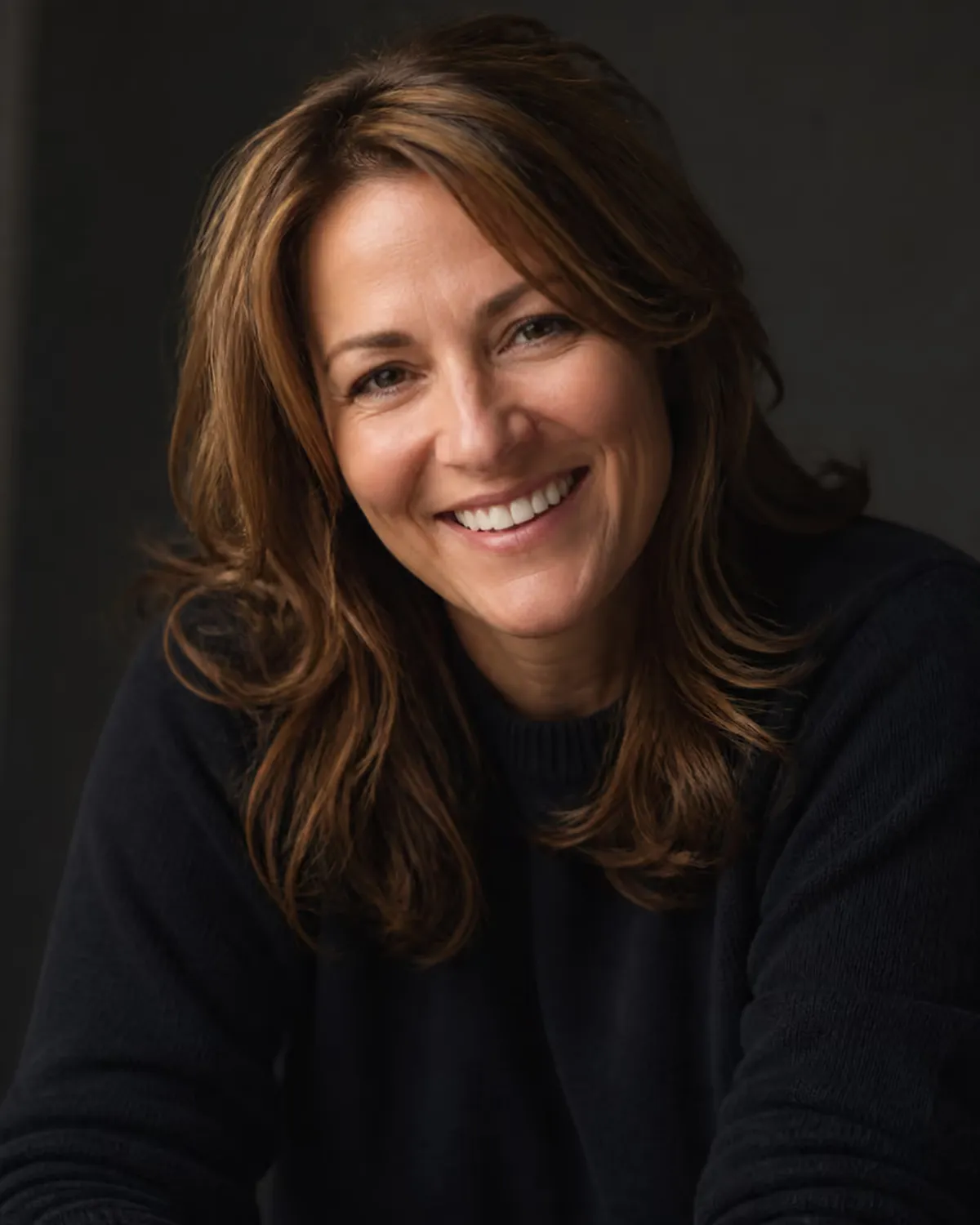
Karen Doherty · Treatment coordinator
Not sure where to start?
Karen will talk you through the options — what your situation usually needs, what it costs and what it involves. A callback is free and carries no obligation; the consultation, with the examination and 3D scan, is £95.
Not ready to speak to anybody? Download the price guide (PDF) — every figure we charge, on one page.
Or ring the clinic directly on 028 9649 6180.