01 Second opinions
Replacing a failed dental implant
We take on failing implants placed elsewhere, including work done abroad, without commentary.
- Cost
- From £2,450
- Typical range
- £2,450 – £3,200
- Time
- 6–9 months, depending on whether grafting is needed
This page covers one part of what we do. The full picture is on dental implants in Belfast.
02 Suitability
Can a failed dental implant be replaced?
A good fit if…
- An implant has become loose, painful or infected
- The gum around an implant bleeds, recedes or discharges
- The crown on an implant keeps coming off or feels different when you bite
- You had treatment abroad and cannot easily go back
Probably not if…
- The problem is with a natural tooth rather than an implant, which your own dentist should see first
- You are looking for someone to take over routine maintenance only — we can, but your own hygienist may be closer
- The implant is comfortable and you want it removed for cosmetic reasons alone
03 Process
How it works
The full six-step process, including what happens after the teeth are fitted, is on the pillar page.
-
01 60 minutes
Assessment and CBCT scan
We measure the bone around the fixture and look for what is actually causing the problem — infection, cement left below the gum, an overloaded bite, or insufficient bone from the start.
-
02 Same appointment
An honest answer
Whether it can be saved, needs replacing, or should simply be monitored. Some failing implants are stabilised; some are past that point.
-
03 45–90 minutes
Removal and grafting
A failing implant is rarely difficult to remove. The site is cleaned and grafted to rebuild the bone that was lost.
-
04 6 months, then 3 more
Healing, then replacement
The graft matures, a second scan confirms the volume, and a new implant is placed in a corrected position.
04 The price
What’s included
From £2,450
Typically £2,450 – £3,200. 2 visits over 3–4 months.
- CBCT scan and full assessment of the existing implant
- A written explanation of what went wrong
- Removal of the failed implant where that is the answer
- Grafting of the site
- The replacement implant and crown
- Assessment of any other implants placed at the same time
05 In detail
What we look for on the scan
A failing implant usually looks like a healthy implant to the naked eye, right up until it does not. The scan is where the story is.
Bone loss around the neck of the fixture, described in millimetres. Whether that loss is a shallow saucer, which suggests inflammation, or a deep vertical defect on one side, which suggests something mechanical. Whether the implant was placed into enough bone in the first place, which is a surprisingly common finding and not something the patient could have known.
We also look for cement. When a crown is cemented onto an implant rather than screwed, excess cement can be pushed below the gum where it cannot be seen or reached, and it holds inflammation in place indefinitely. It shows up as a bright fleck on the scan and it explains a great many otherwise unaccountable failures.
Saving it, where that is possible
Not everything that is inflamed is lost.
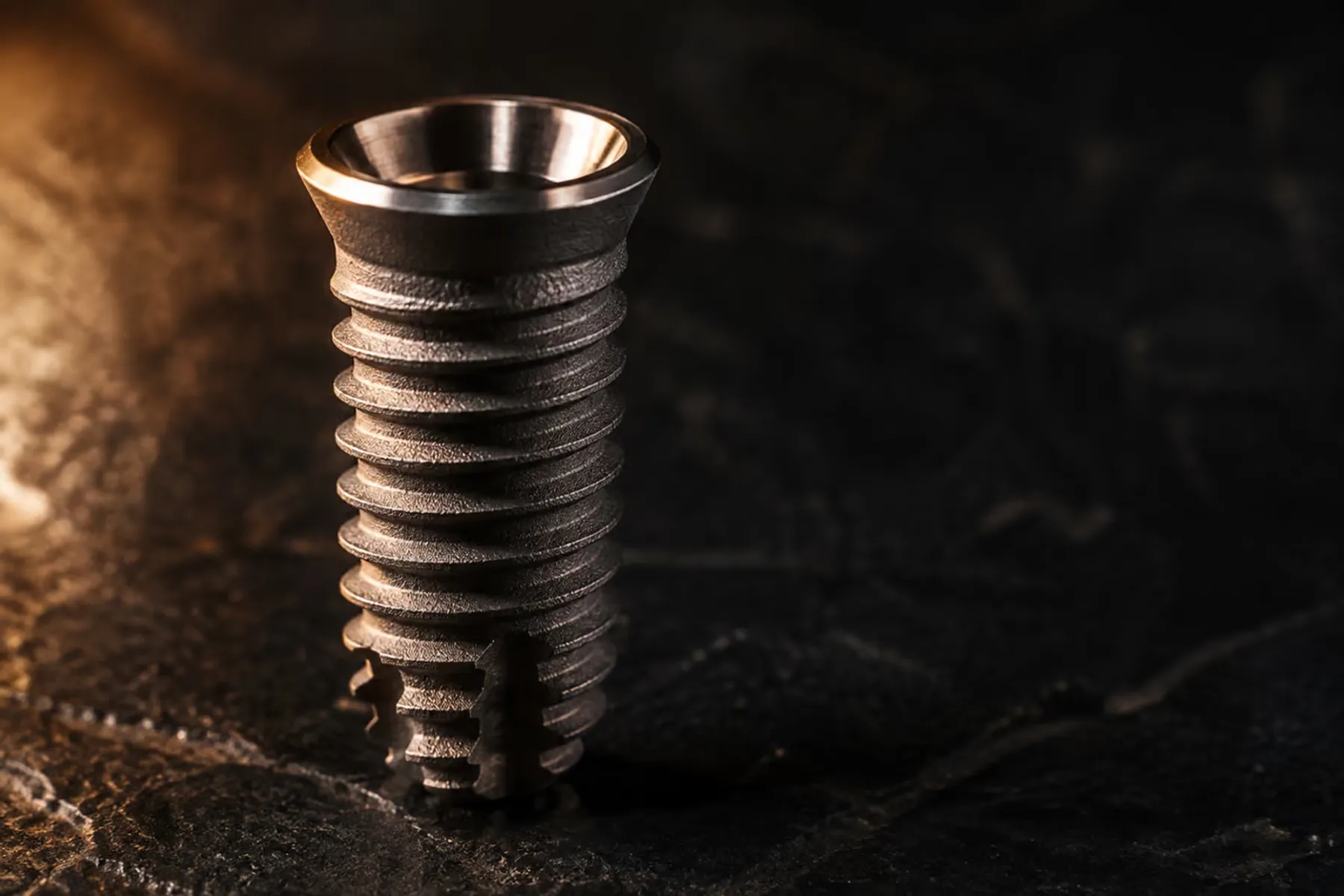
Where the bone loss is limited and the implant is still firmly held, the aim is to arrest the process: remove the cause, clean the exposed implant surface with instruments that will not damage the titanium, correct the bite if it is overloading the fixture, and put a genuine maintenance regime in place. The bone lost does not come back, but the loss can be stopped.
Where the implant has lost more than about half of its support, or where it is mobile, that conversation is over. A mobile implant has not integrated and will not re-integrate, and prolonging it costs you bone that the replacement will need.
Why we check the others
People rarely have one implant placed abroad. They have several, often in one week, sometimes alongside crowns on natural teeth.
When one has failed, the others were placed by the same hands under the same conditions, so we scan all of them. Frequently they are perfectly sound and we say so, which is worth hearing after a bad experience. Sometimes one or two are showing early changes that are far easier to deal with now than in three years.
There is no charge for looking at the others as part of the same assessment.
What you can expect us to put in writing
What we found, in measurements. What we think caused it. What the options are, including the option of doing nothing for now, with the consequences of each. And what each one costs.
You are welcome to take that away and get a second opinion on it, including back to whoever did the original work. Somebody who has already had one course of implant treatment go wrong is entitled to be sceptical of the next person promising to fix it, and a written plan with numbers in it is the only reasonable answer to that.
06 A case
An implant that failed, removed and replaced
An implant placed abroad in 2023 that became loose and painful just over a year later.
- Treatment
- Failed implant, removed and replaced
- Time
- 9 months, 3 visits
- Cost
- £4,100
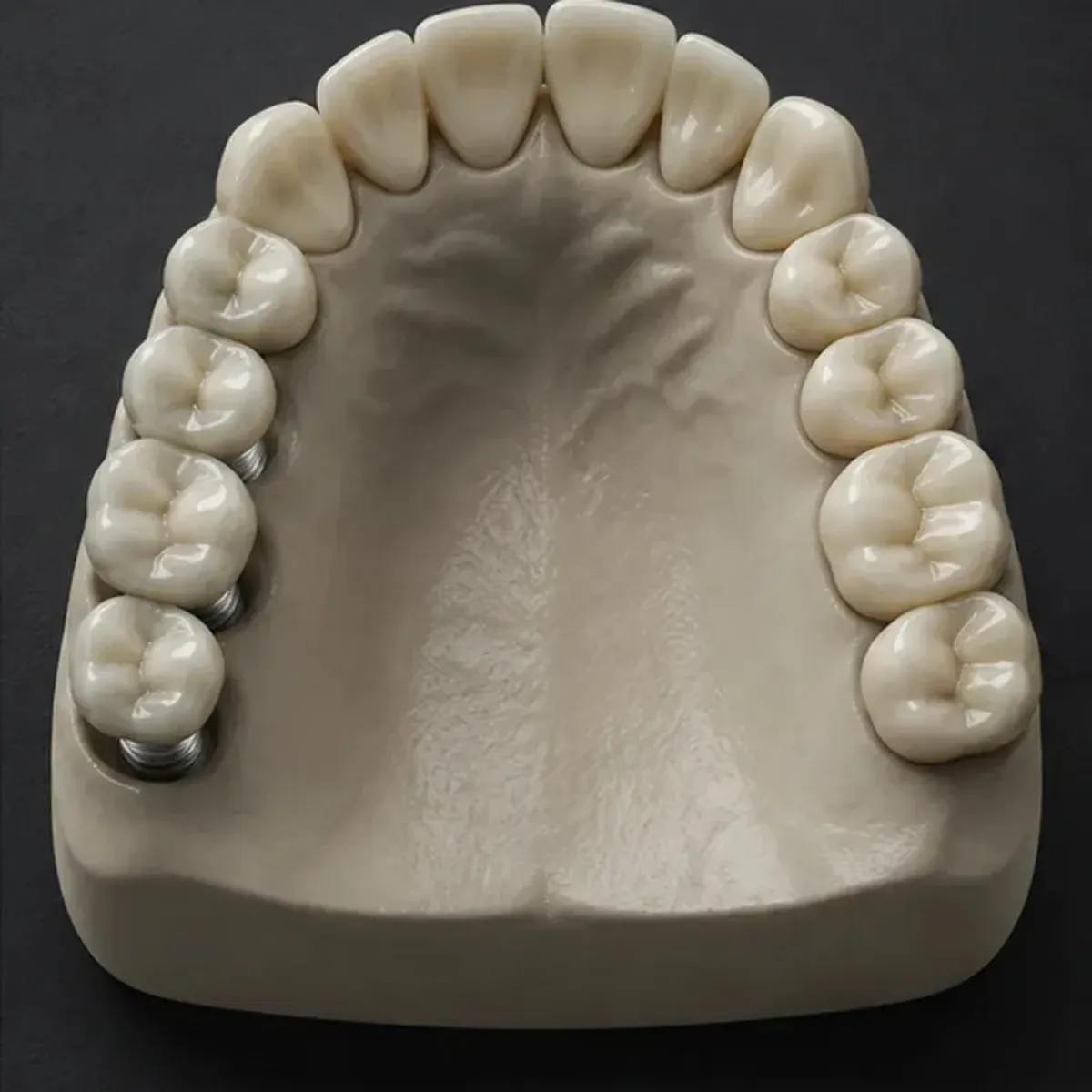
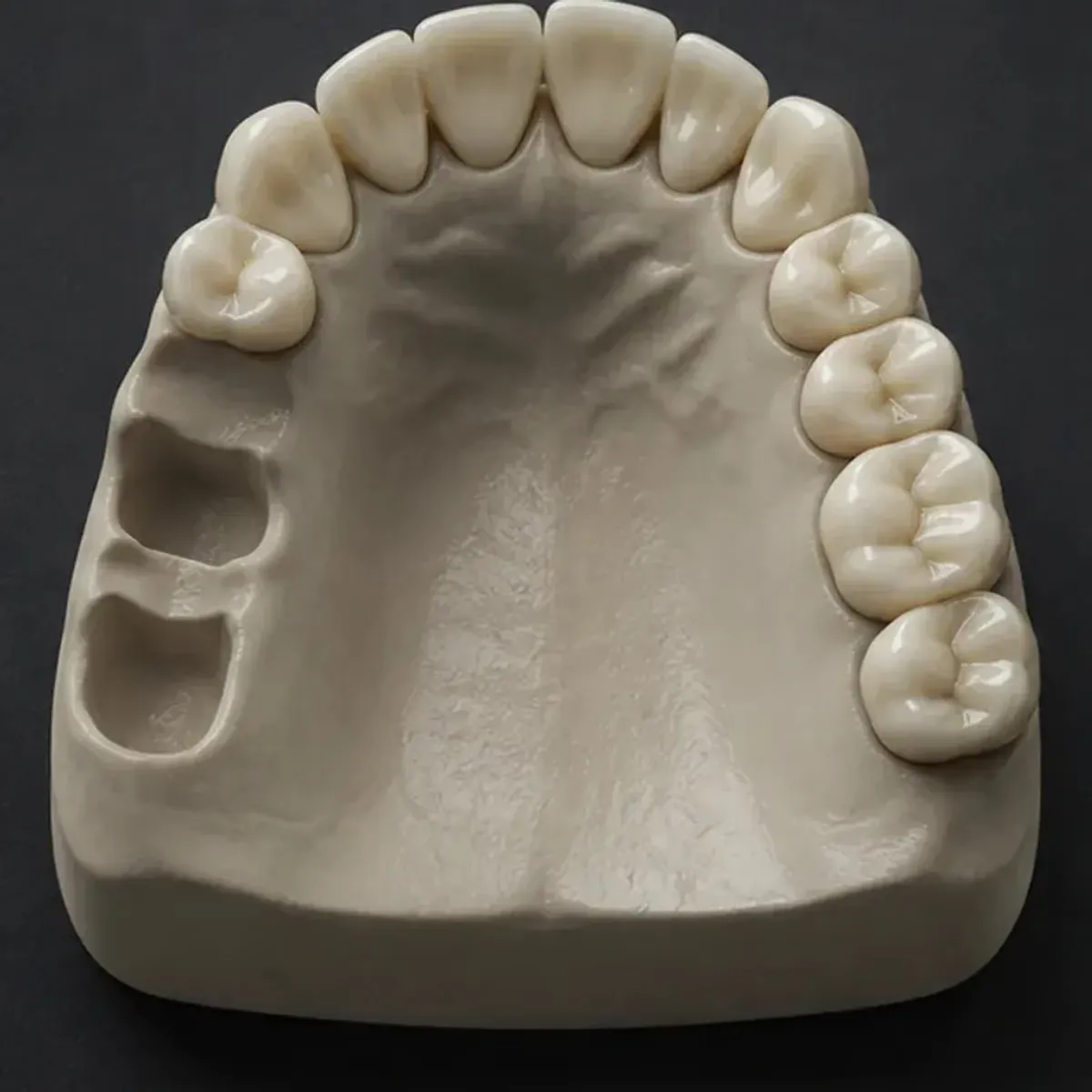
Illustrative example — not a photograph of a patient.
07 Alternatives
What we’d also mention
We would rather you chose the right treatment than the one on this page.
Treating the implant rather than removing it
Where bone loss is early and the implant is still firm, cleaning the surface and correcting the cause can arrest it. This is the better outcome where it is possible, and the scan is what tells us whether it is.
Leaving the space, or bridging it
Not every failed implant needs replacing with another. Where the site has lost a lot of bone, a bridge from the neighbouring teeth is sometimes the more sensible plan, and we will say so rather than sell a second attempt.
01 I had this done abroad. Will you see me?
Yes, and without a lecture. People who travel for treatment are not foolish; they are responding to a price difference the UK profession has not explained well. What we do is assess what is there, tell you what is happening and what it will take to put right. The commentary is not useful to you and we keep it to ourselves.
02 Why do implants fail?
Early failures, in the first months, are usually a failure to integrate — often linked to smoking, bone quality, or heat during placement. Late failures are usually peri-implantitis, the inflammatory loss of bone around a fixture that is already in use. Cement left below the gum at the fitting appointment is a common and entirely preventable cause.
03 Can the same site be used again?
Usually, after grafting and healing. The replacement is often a wider implant in a slightly different position, because the original position frequently contributed to the problem. Where the bone loss has been severe, we sometimes place the new implant in an adjacent site instead.
04 How much does it cost to put right?
Removal and grafting is typically £1,250. The replacement implant and crown is £2,450 upwards. It is more expensive and slower than doing it once properly, which is the honest arithmetic and worth knowing before booking treatment on price alone.
Related treatments
Building the foundation
Bone grafting and sinus lifts, for when there isn’t enough bone
Being told there is not enough bone is usually a step in the plan, not a refusal.
From £650
One tooth
Single tooth implants: replacing one missing tooth
One implant, one crown, and no work done to the teeth either side of it.
From £2,450

Karen Doherty · Treatment coordinator
Not sure where to start?
Karen will talk you through the options — what your situation usually needs, what it costs and what it involves. A callback is free and carries no obligation; the consultation, with the examination and 3D scan, is £95.
Not ready to speak to anybody? Download the price guide (PDF) — every figure we charge, on one page.
Or ring the clinic directly on 028 9649 6180.