01 One tooth
Single tooth implants: replacing one missing tooth
One implant, one crown, and no work done to the teeth either side of it.
- Cost
- From £2,450
- Typical range
- £2,450 – £3,200
- Time
- 2 visits over 3–4 months
This page covers one part of what we do. The full picture is on dental implants in Belfast.
02 Suitability
Is a single tooth implant right for you?
A good fit if…
- You are missing one tooth, or have one that cannot be saved
- The teeth either side are healthy and you would rather they stayed that way
- You want something fixed that you do not take out
- You are prepared to clean around it properly and attend hygiene appointments
Probably not if…
- The neighbouring teeth already need crowns, in which case a bridge may make better sense
- You smoke heavily and are not willing to stop around the healing period
- You want it finished in a fortnight — bone healing takes the time it takes
- Your gum disease is active and untreated, which has to be dealt with first
03 Process
How it works
The full six-step process, including what happens after the teeth are fitted, is on the pillar page.
-
01 60 minutes
Consultation and 3D scan
Examination, CBCT scan and a written plan with a fixed price. We measure the bone rather than estimate it.
-
02 45–60 minutes
Placing the implant
Local anaesthetic, a printed surgical guide, and a temporary tooth fitted before you leave. Most people are back at work the next day.
-
03 3–4 months
Healing
The bone grows onto the implant surface. Two short reviews during this period, ten minutes each.
-
04 2 appointments over 3 weeks
The final crown
A digital scan, then the crown made in our laboratory upstairs, shade-matched in daylight against your own teeth.
04 The price
What’s included
From £2,450
Typically £2,450 – £3,200. 2 visits over 3–4 months.
- CBCT scan and written treatment plan
- The implant, placed through a printed surgical guide
- A temporary tooth from the day of surgery
- The abutment and the final ceramic crown
- Two review appointments in the first year
- Five-year guarantee on the implant, two years on the crown
05 In detail
An implant replaces the root, not the tooth
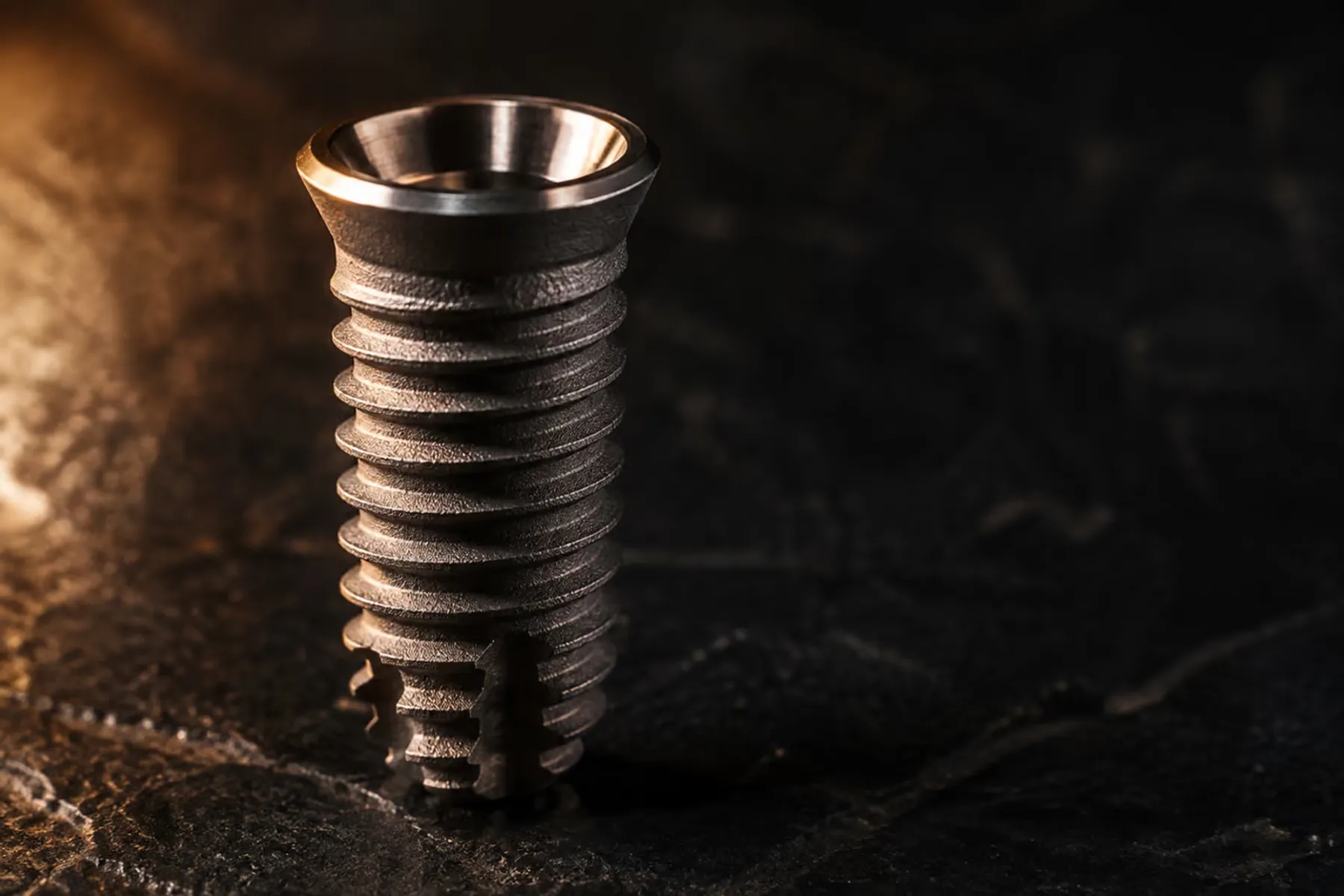
This is the distinction that makes the rest of it make sense. A bridge and a denture both replace what shows above the gum and leave the space underneath empty. An implant replaces what was in the bone.
That matters because bone behaves like muscle: it is maintained by being used. A tooth root transmits the force of biting into the jaw, and the jaw responds by keeping the bone where it is. Take the root away and the signal stops. The ridge narrows and shortens — quickly at first, around a quarter of the width in the first year, then more slowly but without ever stopping.
You can see this in anyone who has worn a lower denture for twenty years. The chin comes forward, the lower face shortens, and the ridge the denture was made to fit is no longer there. An implant is the only replacement that interrupts that process, because it is the only one that puts load back into the bone.
What actually happens to the tooth next door
The strongest argument for an implant in a single gap is usually about the teeth that are still there.
A conventional bridge is held by crowns on the teeth either side. To fit those crowns, both teeth are reduced — real, permanent removal of enamel from teeth that may have nothing wrong with them. In a mouth that has to last another thirty years, that is not a neutral act. Roughly a third of teeth prepared for bridgework need root treatment within a decade, because cutting close to the nerve is an insult the tooth may or may not tolerate.
If those neighbouring teeth already carry large fillings or need crowning anyway, that cost is already sunk and a bridge becomes a sensible option. We will tell you which situation you are in. It is a five-minute conversation at the consultation and it changes the recommendation entirely.
The back teeth nobody sees
About half the single implants we place are back teeth, and patients often arrive slightly embarrassed about wanting one — the assumption being that if it does not show, it does not matter.
It matters for chewing. Molars do the work; the front teeth are for cutting. People who have lost a molar or two on one side reliably move all their chewing to the other side, which they usually have not noticed doing. Over years that produces uneven wear, an overworked joint on one side and, in the space itself, a slow collapse as the tooth above drops down into it.
There is a limit to this argument. If you have already lost the very last molar in the arch and nothing has moved in ten years, replacing it may be an expense without much return, and we would say so.
The maintenance is the real commitment
An implant will not decay. What it can do is lose the bone around it, through the same inflammatory process that loosens natural teeth, and it does so faster because the tissue around an implant has a poorer blood supply and fewer fibres anchoring it.
Peri-implantitis is the main cause of implant loss after the first year, and it is largely preventable with an interdental brush used daily and a hygienist who knows what to measure. Every plan here includes those appointments. If you are not going to attend them, an implant is the wrong choice — that is said plainly at the consultation rather than discovered later.
06 A case
The front tooth that had been root treated twice
A tooth that had been root filled twice, had darkened, and was now infected at the tip.
- Treatment
- Single implant, upper front tooth
- Time
- 4 months, 2 surgical visits
- Cost
- £2,850
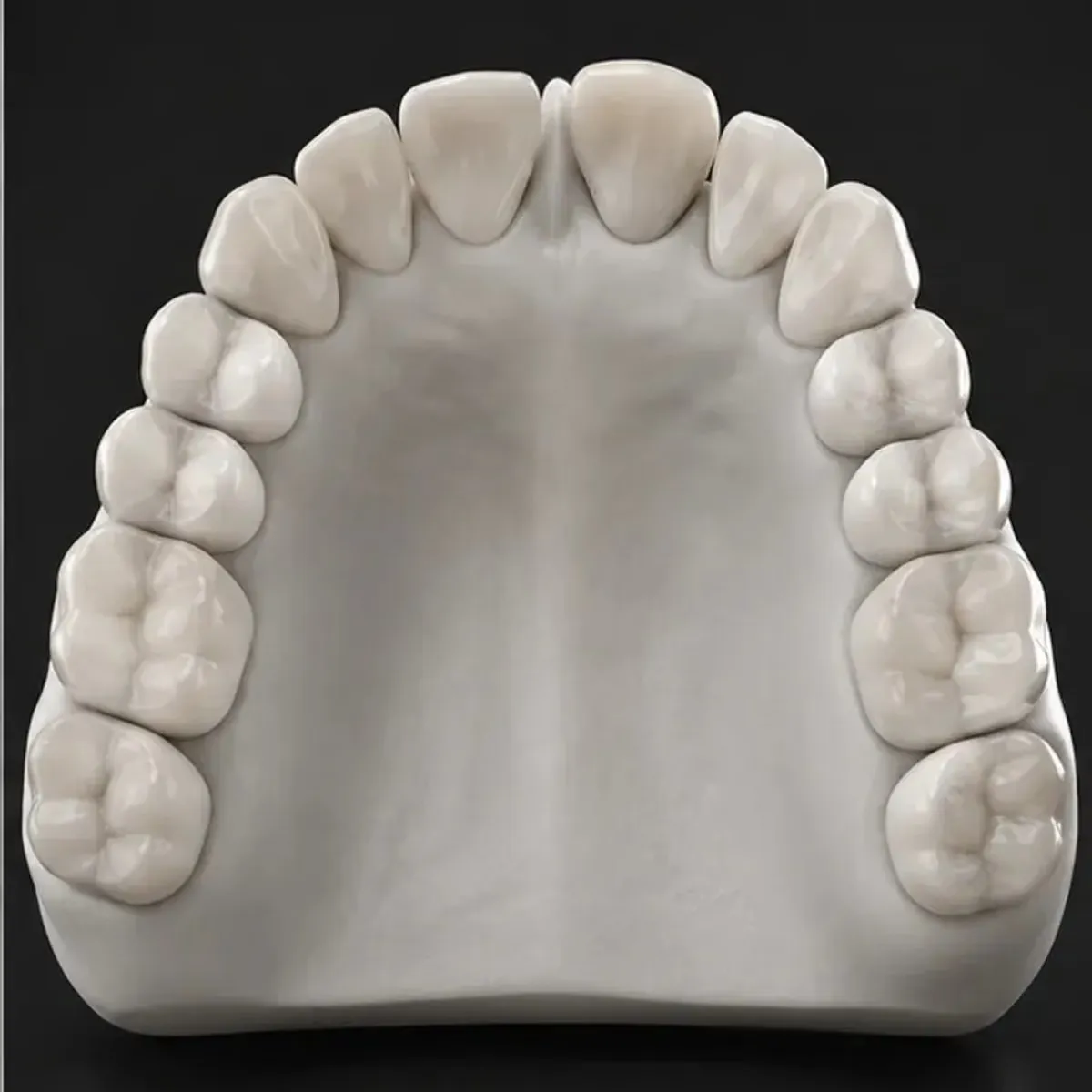
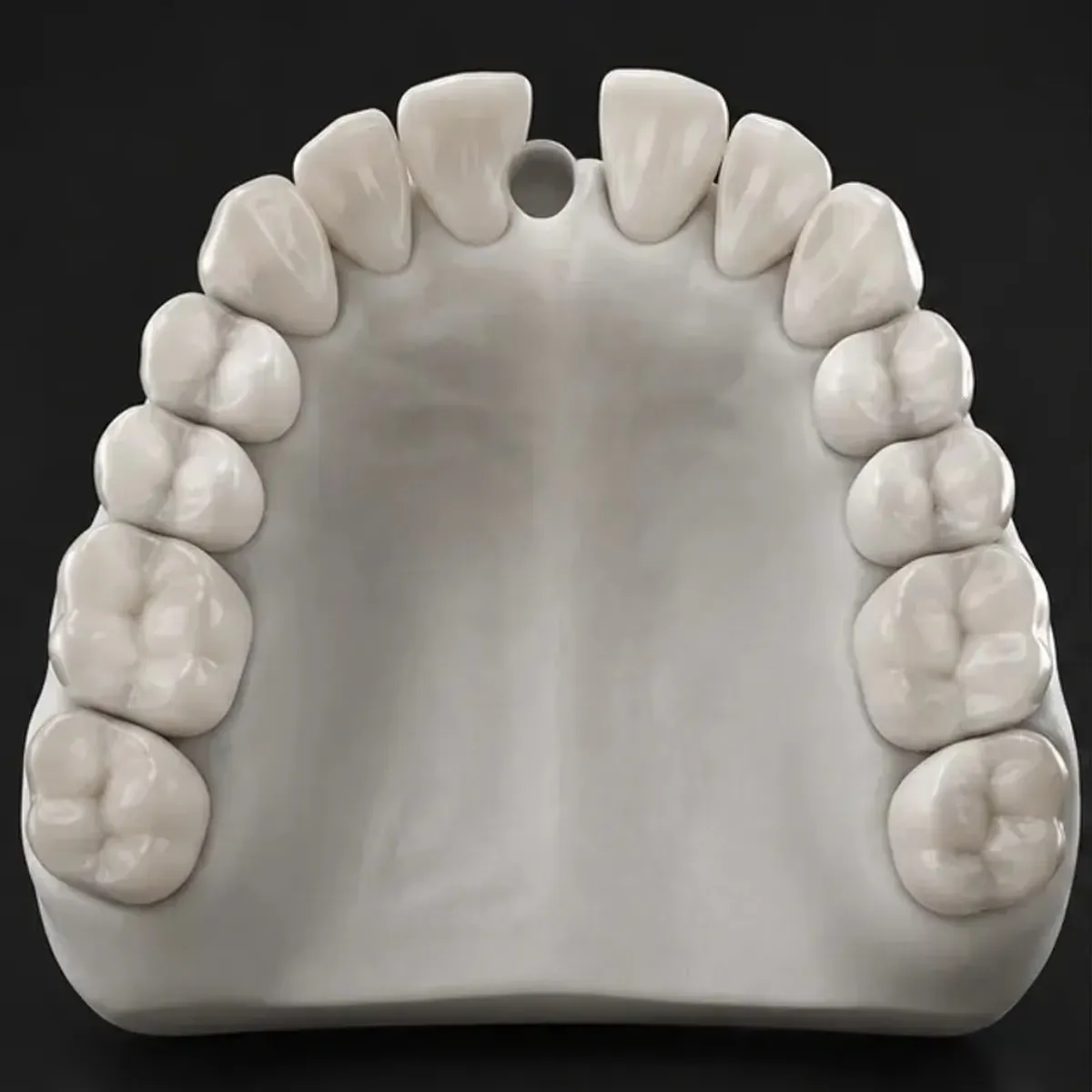
Illustrative example — not a photograph of a patient.
07 Alternatives
What we’d also mention
We would rather you chose the right treatment than the one on this page.
A conventional bridge
Cheaper up front and quicker, but it means cutting down the two healthy teeth either side of the gap to carry it. If those teeth already need crowns that cost disappears; if they are sound, you are trading two good teeth for one missing one.
Leaving the gap
A reasonable choice for a back tooth in some mouths, and a poor one in most. The teeth either side drift, the opposing tooth grows down, and the bone in the gap narrows year on year — which makes an implant later both harder and dearer.
01 Will the new tooth match my own teeth?
That is the whole difficulty of a single tooth, and it is why the crown is made on the premises rather than posted away. The shade is taken in daylight against your neighbouring tooth, and if the first attempt looks too perfect beside a fifty-year-old incisor, we remake it. A single front tooth is the hardest case in implant dentistry, harder than a full arch.
02 Can the implant be placed on the same day the tooth is taken out?
Sometimes. It depends on whether there is infection in the socket and whether the outer wall of bone is intact, which the CBCT scan shows. Where it is possible it saves three or four months. Where it is not, forcing it produces a worse result, so we graft the socket and come back to it.
03 How long does the appointment itself take?
Placing a single implant takes forty-five minutes to an hour, most of which is preparation and getting you comfortable. The surgical part is usually fifteen minutes.
04 What if it fails?
Around one in twenty implants fails to integrate, most often in the first few months and most often in smokers. If yours does, we remove it, graft the site and replace it at no charge within the guarantee period. That happens rarely, but it is better said out loud than discovered in the small print.
Related treatments
Two to four teeth
Implant bridges: replacing several teeth in a row
Three teeth carried on two implants, without touching the teeth either side.
From £6,400
Building the foundation
Bone grafting and sinus lifts, for when there isn’t enough bone
Being told there is not enough bone is usually a step in the plan, not a refusal.
From £650

Karen Doherty · Treatment coordinator
Not sure where to start?
Karen will talk you through the options — what your situation usually needs, what it costs and what it involves. A callback is free and carries no obligation; the consultation, with the examination and 3D scan, is £95.
Not ready to speak to anybody? Download the price guide (PDF) — every figure we charge, on one page.
Or ring the clinic directly on 028 9649 6180.