01 Two to four teeth
Implant bridges: replacing several teeth in a row
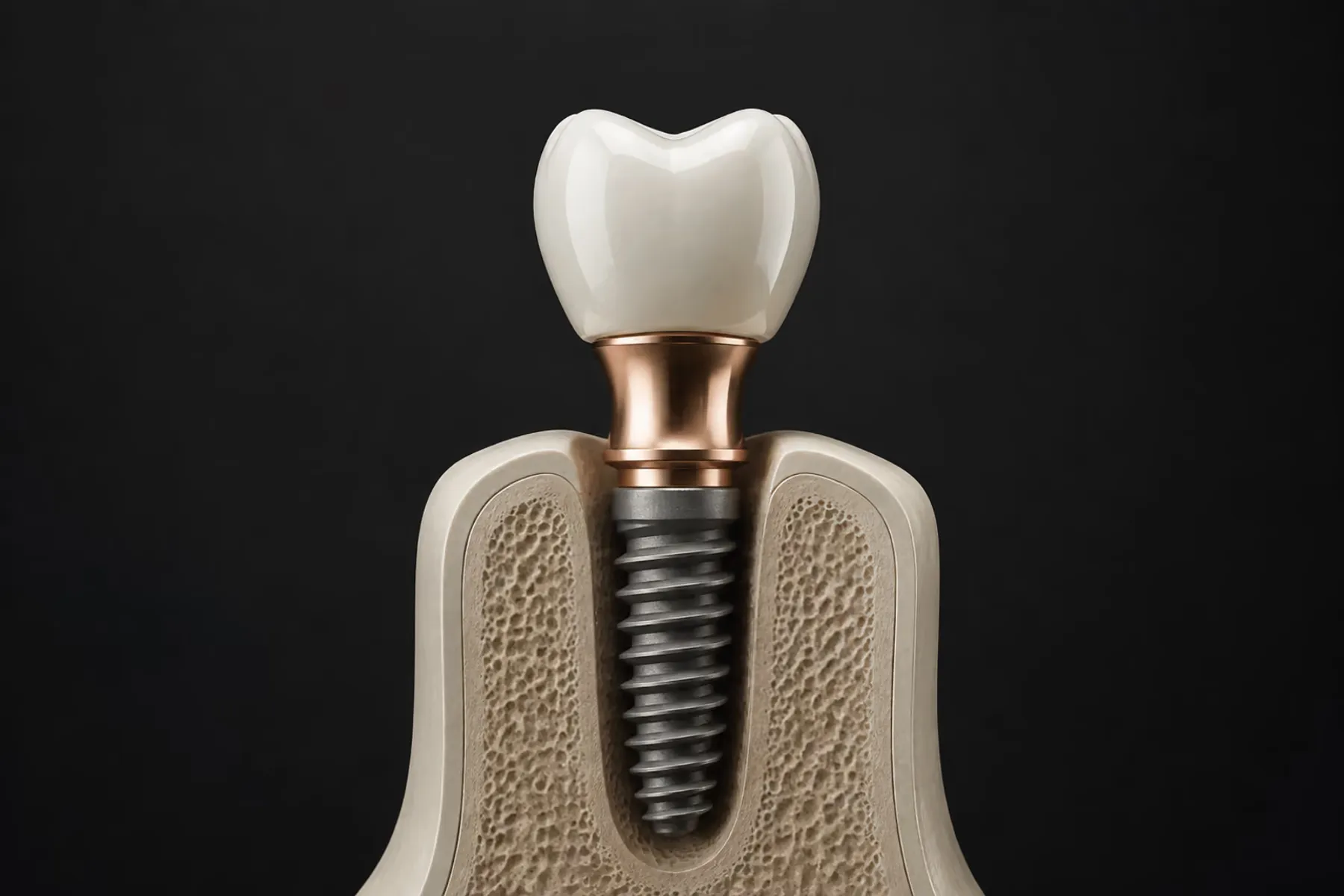
Three teeth carried on two implants, without touching the teeth either side.
- Cost
- From £6,400
- Typical range
- £6,400 – £8,900
- Time
- 3 visits over 4 months
This page covers one part of what we do. The full picture is on dental implants in Belfast.
02 Suitability
Is an implant bridge right for you?
A good fit if…
- You are missing two to four teeth next to each other
- You want something fixed rather than a partial denture
- There is reasonable bone at both ends of the gap, or grafting can create it
- You are not looking to replace every tooth in the jaw
Probably not if…
- The gap has healthy teeth scattered through it that would need removing to make a bridge sensible
- There is only one implant site available at one end of a long span
- You are missing most of the arch, where All-on-4 is both better and cheaper
- Active gum disease has not yet been treated
03 Process
How it works
The full six-step process, including what happens after the teeth are fitted, is on the pillar page.
-
01 60 minutes
Consultation and 3D scan
The scan decides where two implants can sit and whether the span between them is workable. You leave with a written plan and a price.
-
02 60–90 minutes
Placing the implants
Both implants at one appointment under local anaesthetic, with sedation available. A temporary bridge or denture keeps the space filled.
-
03 3–4 months
Healing
The implants integrate. If grafting was needed at the same visit, this stage is longer — usually six months.
-
04 2 appointments over 3 weeks
Fitting the bridge
A digital scan, then the bridge made in our laboratory in zirconia or porcelain, tried in and fitted.
04 The price
What’s included
From £6,400
Typically £6,400 – £8,900. 3 visits over 4 months.
- CBCT scan and written treatment plan
- Two implants placed through a printed guide
- A temporary to wear while the implants heal
- The bridge itself, made in our own laboratory
- Two review appointments in the first year
- Five-year guarantee on the implants, two years on the bridge
05 In detail
The span is the whole design problem
A bridge on implants is an engineering question dressed up as a dental one. Two fixed points, a load across the middle, and a material that has to survive several hundred kilograms of biting force a day for fifteen years.
That is why the number of implants is not simply the number of teeth. Two implants at either end of a three-tooth gap carry the middle tooth between them without difficulty, in the same way a beam bridges two piers. Stretch it to four teeth and the forces on the metal and on the bone at each end rise sharply. Stretch it further and something eventually gives — usually the screw, occasionally the bone.
So the scan is not just checking whether there is bone for implants. It is checking whether there is bone in the right two places, far enough apart to be stable and close enough together that the span is sensible.
Where the teeth went matters
Two missing teeth in the lower back of the mouth and two missing upper front teeth are entirely different problems, and it is worth knowing which you have.
At the back, the bone is generally more generous in width but the nerve running through the lower jaw sets a ceiling on depth, and in the upper jaw the sinus sits directly above the molar roots and drops lower as the years pass. Those two structures are the reason a CBCT scan is not optional. A flat X-ray shows you a picture; it does not show you how much room you have.
At the front, the surgical part is often easier and the aesthetic part far harder. The gum line across two or three adjacent teeth has to look continuous, and the little triangles of gum between the teeth are the most difficult tissue in dentistry to recreate once lost. That is a case we plan slowly and where we are candid about what is achievable.
The alternative most people arrive holding
A great many patients come to us with a partial denture in a case in their pocket rather than in their mouth. It is worth understanding why they so often fail.
A partial rests on the gum and clips onto the remaining teeth. Those clasps pull on teeth that were not designed to be pulled on, which is why long-term partial wearers often lose the clasped teeth eventually. It moves when you eat, it traps food beneath it, and it does nothing at all to stop the bone in the gap from shrinking — in fact it accelerates it by pressing on the ridge.
None of which makes a partial the wrong answer for everybody. It is a quarter of the cost and available in a few weeks, and for someone who needs teeth before an event, or who is not well enough for elective surgery, it is a perfectly reasonable thing to have. But it should be chosen knowing what it is, and it is very often chosen because nobody explained the alternative.
What we will check before agreeing
Gum disease first. An implant placed into a mouth with active periodontal disease is an implant placed into a bacterial reservoir, and the failure rate reflects it. If your gums need treating, that happens before anything else and it is not a delaying tactic.
Then the bite. If you grind your teeth — and many people do without knowing — a bridge takes that force every night for years. It does not rule treatment out, but it changes the material we choose and it means you leave with a night guard.
06 A case
Three teeth at the back, on two implants
Three lower back teeth lost over a decade, and a partial denture that was never worn.
- Treatment
- Implant bridge, lower left
- Time
- 5 months, 3 visits
- Cost
- £7,200
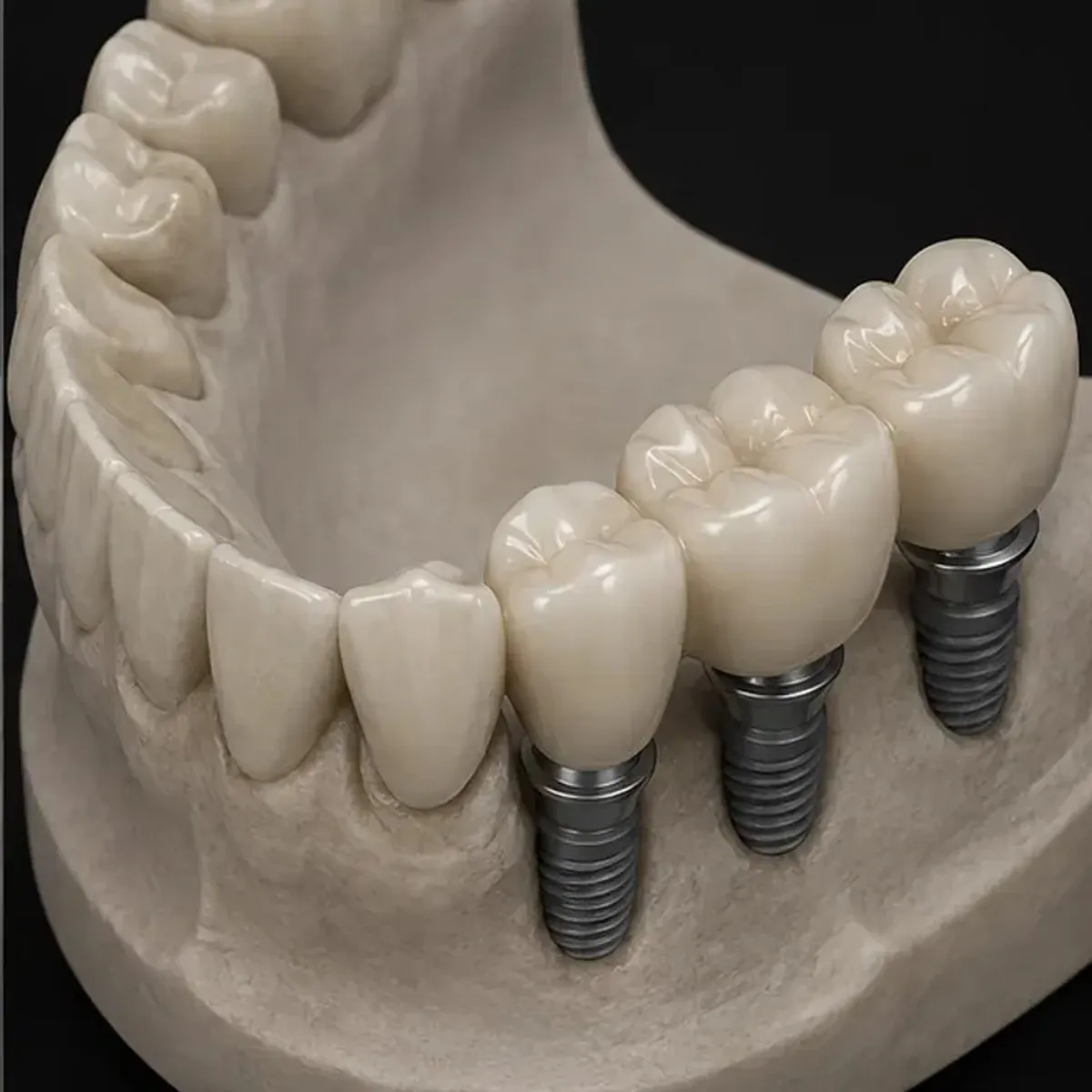
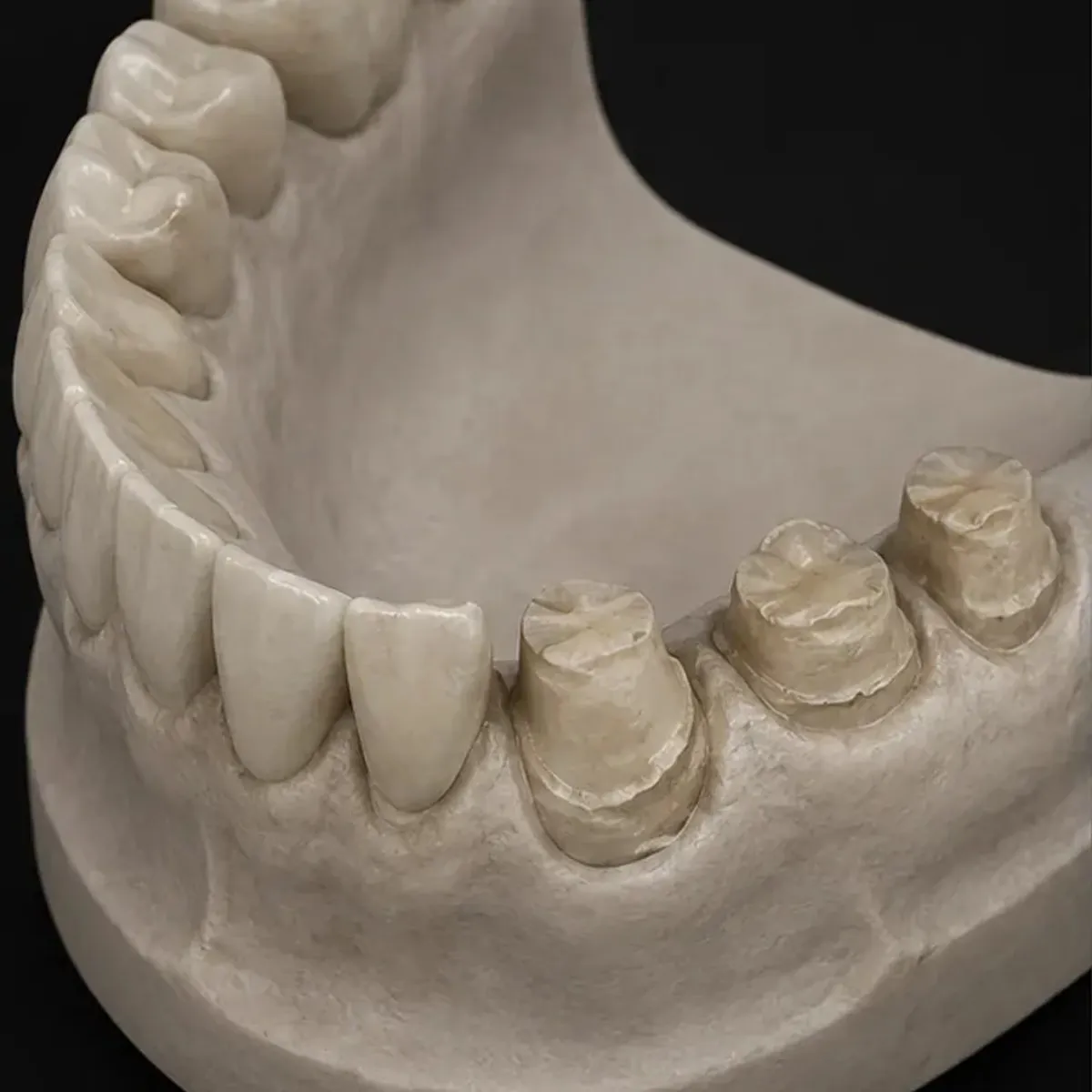
Illustrative example — not a photograph of a patient.
07 Alternatives
What we’d also mention
We would rather you chose the right treatment than the one on this page.
Individual implants
Three implants for three teeth is possible and occasionally right, but it is more surgery, more cost and more places for plaque to collect between. Two implants carrying three teeth is the standard answer for good reasons.
A partial denture
A quarter of the price and available in weeks rather than months. It also comes out, it rests on your gums and your remaining teeth, and most of the partial dentures we see have spent more time in a drawer than in a mouth.
01 Why two implants for three teeth?
Because two well-placed implants will comfortably carry three units, and the middle tooth does not need its own root any more than the middle of a bridge over a river needs its own pillar. Fewer implants means less surgery, lower cost, and fewer junctions between metal and gum for plaque to gather at.
02 How do I clean underneath it?
With a floss threader or a small interdental brush passed beneath the bridge daily. It takes about a minute once you have the knack, and Aoife teaches it at the fitting appointment rather than handing you a leaflet. This is the part that decides whether the bridge lasts fifteen years or seven.
03 Can a bridge replace four teeth?
Sometimes, on two implants, if the bone is good and the bite is favourable. Beyond that we would usually want a third implant. A four-unit span on two implants asks a great deal of the metal and of the bone, and where we are not confident we say so.
04 What is it made of?
Usually zirconia, occasionally porcelain bonded to metal where the space is tight. Both are made upstairs by Marek. Zirconia is the default: it is strong, it does not have a metal edge that can show as the gum recedes, and it takes a shade well.
Related treatments
One tooth
Single tooth implants: replacing one missing tooth
One implant, one crown, and no work done to the teeth either side of it.
From £2,450
Denture stabilisation
Implant-retained dentures that don’t move
Two to four implants that hold a denture firmly in place, at a fraction of the cost of a fixed arch.
From £5,900

Karen Doherty · Treatment coordinator
Not sure where to start?
Karen will talk you through the options — what your situation usually needs, what it costs and what it involves. A callback is free and carries no obligation; the consultation, with the examination and 3D scan, is £95.
Not ready to speak to anybody? Download the price guide (PDF) — every figure we charge, on one page.
Or ring the clinic directly on 028 9649 6180.